Friday, September 16, 2011

Soft Sculpture (due Oct. 7 )


Definition of Pop Art from Wikipedia

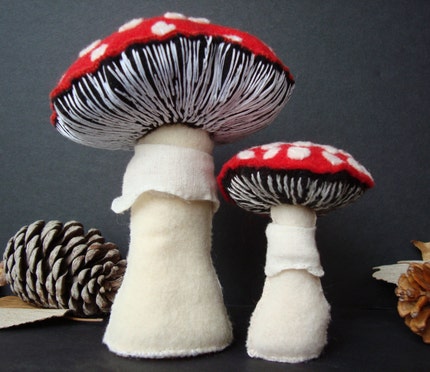
Like Claes Oldenberg, you will create a soft version of an everyday object that is normally hard. Choose an object that has interesting contours, no cell phones or iPods.

Homework for next week 9/23:
1. Collect materials you will use and bring them to class. You will need fabric (any kind, thick or thin, old or new), stuffing (old pillow, packing peanuts, crumpled newspaper, shredded paper), needles and thread.
2. Detailed drawings of the object you will create. Study and draw all sides of the object. Think about the planes and contours that make up the form.

Next week we will teach you how to sew by hand and also using machines. Come prepared to work.
You will have two in-class work days, and will be graded on preparedness, time management and class participation as well as the quality of your final project.

Project requirements:
Minimum size 3'x3'x3'
No glue
Design and construction well-planned

Considerations
Scale: Blown up, shrunk, or 1:1
Choice of materials
Surface details(you can finish the sculpture however you want, by adding things to the surface, painting, it's up to you)

Claes Oldenburg pictures for inspiration


Claes Oldenburg's Club Sandwich


Upside Down City


Ice Bag

Claes Oldenburg's Club Sandwich


Upside Down City


Ice Bag


Surface and details on soft sculpture
Christian Holstadt "The Road to Hell is Paved (Best Buy)
The Road to Hell is Paved (Whole Foods)


Christian Holstad
Defined Thorough Deflation and Limits of Exposure

2004
 Mixed Media: Cashmere coat, tie, white shirt, leather glove, terry cloth, polyester, cotton, vintage millinery trimmings, vintage satin glove, champagne glass, men's suiting and vintage party dress
Dimensions variable

Description:
Two stuffed snakes, a dark male and his floral female mate, lay entwined on the gallery floor clutching a bouquet of microphones. This hand-sewn, soft sculpture, typical of Holstad's interest in traditional forms of craftsmanship, invites us to reconsider culturally prescribed notions of gender, domesticity, and high and low art.

Ideas for how to add detail to your soft sculpture:


Monday, August 22, 2011

Cardboard Replication Project due 9/16


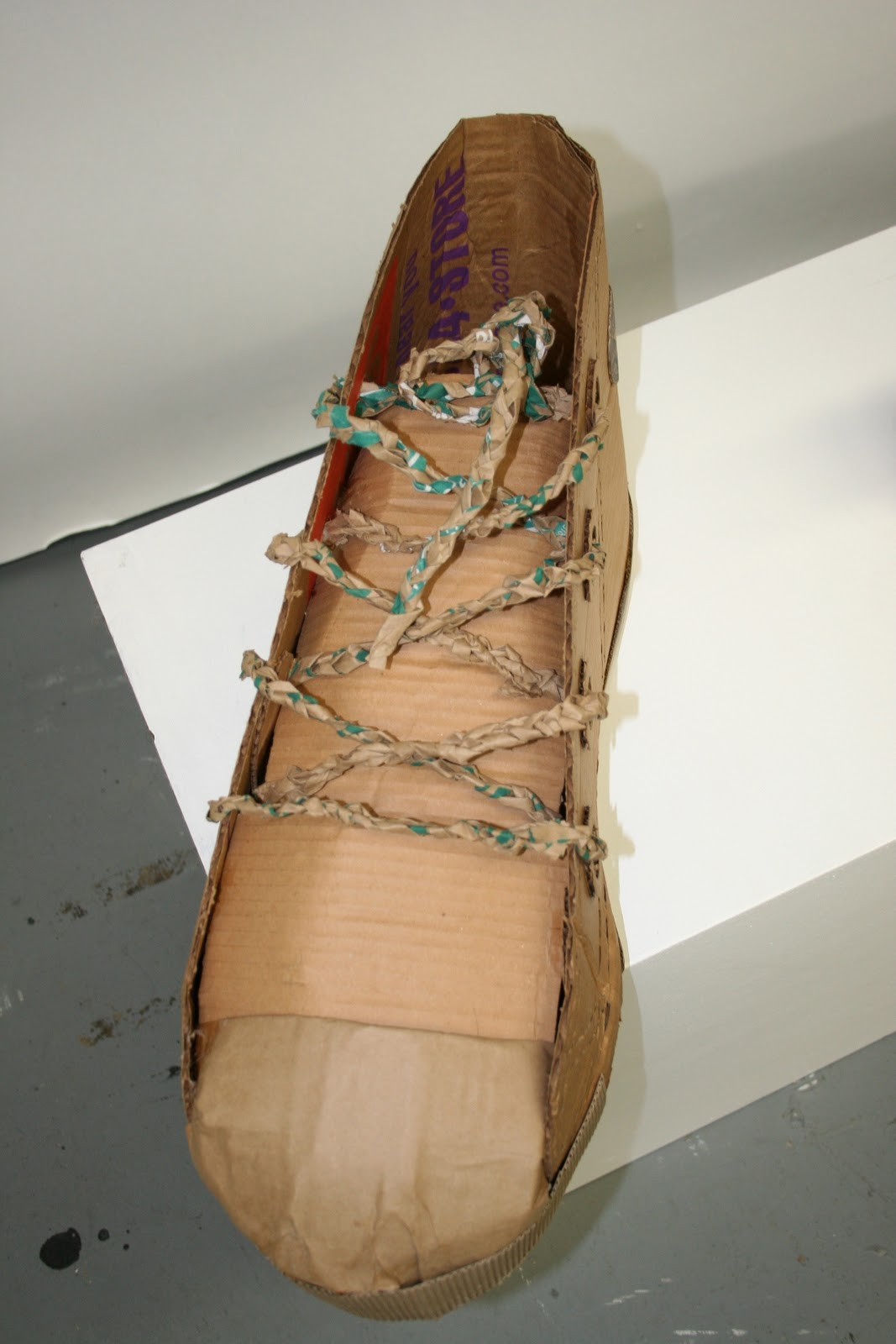
For this project, you will replicate an object from real life, using cardboard to recreate its volume, form and textures. Choose something that you can hold in your hand, no bigger than four inches in any direction. Your sculpture will be larger, between 18 and 24 inches in every direction. Your project will be more successful if you choose an object that isn’t too simple.

Bring to class:
On September 2, bring the following to class & be prepared to work:

1. A small object that fits in your hand. It can be something from nature or something from culture. When you choose your object, ask yourself:
*Will this object be more interesting when I make it bigger?
*Is it too simple or too complex to re-create?
*Does it have interesting form and textures?
*Will changing the size of the object change how we perceive it?

2. Sketchbook: Measurements and sketches of every side of your object, and notes on its texture.
3. An Xacto blade or a box cutter. Keep this safely put away when you are not in class. Everyone will need a blade to complete this project.
4. A ruler.
5. Cardboard. Collect interesting kinds of cardboard (thick, thin, printed, shiny, plain)

****DUE DATE**** September 16 bring your finished project to class.

Important concepts:

Texture refers to the properties held and sensations caused by the external surface of objects received through the sense of touch. You will experiment with tearing, scratching, peeling, crunching, and folding your cardboard. These techniques will allow you to mimic the texture of your object.

Shifting the scale of an object in an artwork forces the viewer to pay more attention to it and think of it outside of its everyday context. Artist Tom Sachs’ NASA space shuttle, made of foam core at human scale, makes a high-tech object seem more approachable and unsound. On the other hand, his mammoth bronze sculptures of Hello Kitty show us a cheaply made child’s toy on a scale usually reserved for Generals and Presidents, making it seem absurdly important. Think about how the scale shift you’re dealing with will change your viewers’ perception of the object you’ve chosen.

Look at these links for inspiration:
Puppy by Jeff Koons.
In Bed, a large lady by Ron Mueck.
The Crawler space shuttle sculpture by Tom Sachs
Chris Gilmour's cardboard sculptures.